

Marketing with AI
A Playbook for Modern Leaders

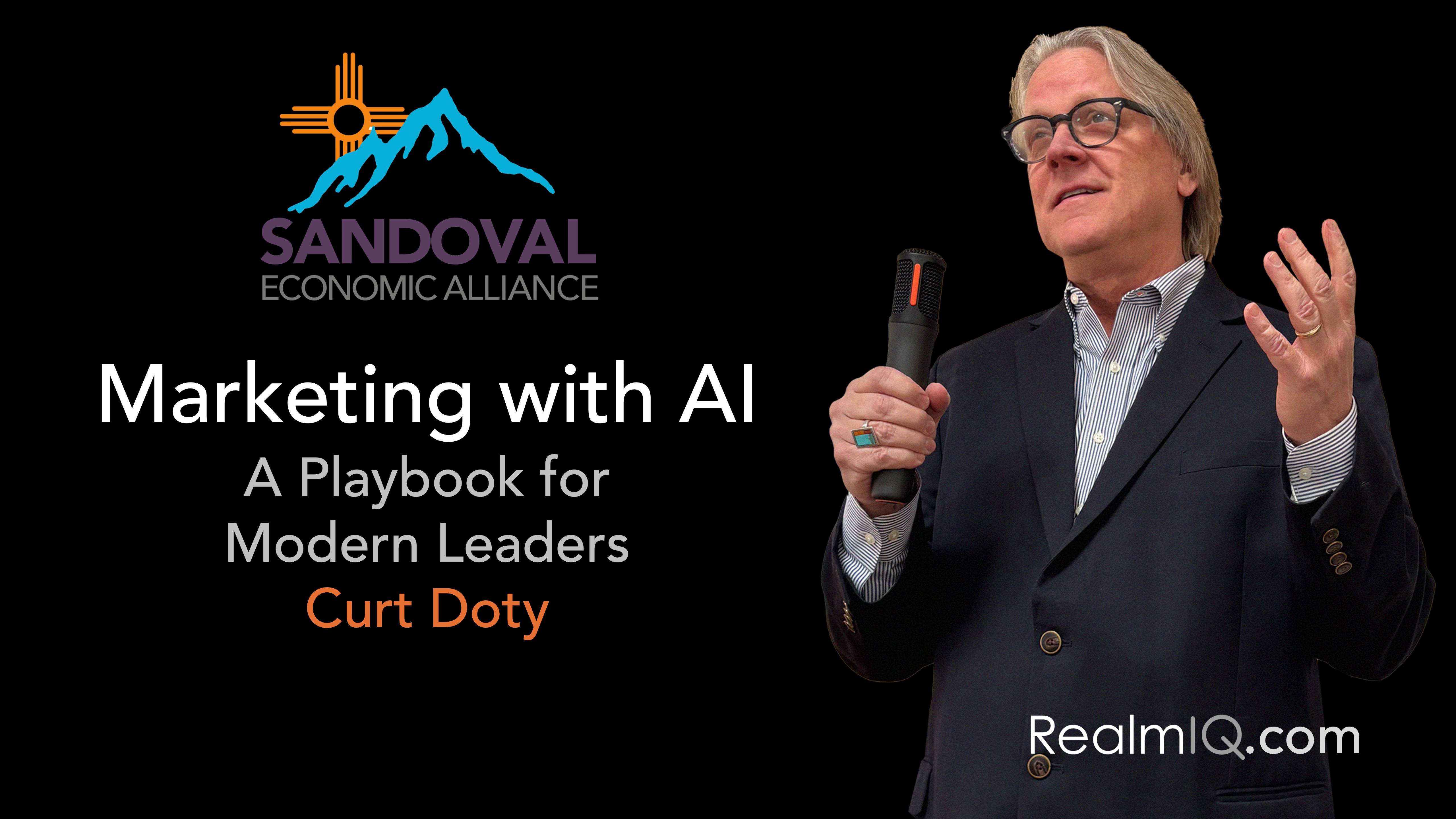
At a recent Sandoval Economic Alliance luncheon, Curt Doty of RealmIQ delivered a compelling and timely talk on the real role of generative AI in our professional and creative lives. The room was packed with business leaders, local government officials, and university faculty, all eager to make sense of the accelerating AI landscape. Doty’s message? Get educated, get strategic, and above all—get over the fear.
Doty, a former Hollywood creative executive, and now a tireless AI evangelist, opened by acknowledging the cultural baggage AI brings—thanks largely to dystopian narratives from his own backyard. “Hollywood invented the fear,” he said, citing Terminator 2 as the original culprit. But rather than fuel the fire, Doty has spent the last year leading monthly AI salons, El Sailon, in Santa Fe, advocating for informed, intentional adoption.
He framed the evolution of AI as inevitable but deeply misunderstood. Generative AI—the prompting-based technology that produces text, images, and video—is only about 10% of the total AI market. And Hollywood’s share of that? A mere 4%. So while the creatives panic, the rest of the world is already moving forward.
Doty illustrated the environmental cost of AI with a brilliant metaphor: a single blog post equals one glass of water. One AI-generated image? Two full bathtubs. A video? A backyard swimming pool. Translation: be mindful. Play, yes—but play with purpose.
He shared a case study on Udio, the controversial AI music platform that initially scraped copyrighted songs. After lawsuits from major music labels, it didn’t fold—it pivoted. Udio is now licensing music and forming partnerships, proof that AI can evolve beyond its “wild west” origins. As Doty noted: “AI done right is starting to happen.”
In one of the lecture’s most relatable moments, Doty mapped out the five emotional stages of AI adoption, borrowed from the Kübler-Ross grief model: denial, anger, bargaining, depression, and finally—acceptance. When asked for a show of hands, most attendees landed in the final camp.
But this wasn’t a pep talk—it was a playbook.
Doty walked through the skills that define AI literacy today: prompt engineering, safe tool use, ethical considerations, content generation, and building custom GPTs. He emphasized the importance of conversational prompting—not just for better results, but to build user confidence. “It’s not about the AI’s feelings. It’s about yours,” he said.
He also detailed how he builds personalized GPTs for client work, turning proprietary intel into branded outputs—while always keeping a human in the loop. “Don’t let AI lead the results for the client. I synthesize, I curate, I present.”
Platform fatigue is real, he acknowledged, but not all tools are created equal. His shortlist includes Perplexity for research, Freepik for multimodal creation, and a rotating cast of AI platforms for imagery, video, and marketing. The key is building a reliable tech stack that suits your workflow.
For those starting from scratch, Doty offered a 9-step roadmap for pilot projects. His advice: start with what you know, identify inefficiencies, test AI for specific steps, document results, and share wins with your team. Culture change starts with small victories.
He closed with a rallying cry: adopt and thrive. Not adopt and fear. “Let AI light the runway. But you’re still the pilot.”
The Q&A brought out practical concerns—around copyright, ethics, and client transparency. Doty was clear: don’t lead with AI, lead with creativity. Clients hire people, not prompts.
And if your agency touts itself as AI-first? Be prepared for a client to ask why they’re paying full price.
In the end, Doty reminded us: the AI shift isn’t about technology. It’s about mindset. Learn to use the tools—but more importantly, remember why you’re using them.
“This isn’t the end of creative careers,” he said. “It’s the end of average.”
If you liked the talk, Doty encouraged folks to sign up for his newsletter or training sessions. But the real homework? Get curious. Get critical. And get moving.
Thanks to Fred Sheperd of SEA for the invite.